
03 Jun EVENT RECAP: EMPOWERING OLDER ADULTS FOR THE DIGITAL AGE
03 Jun, 2026
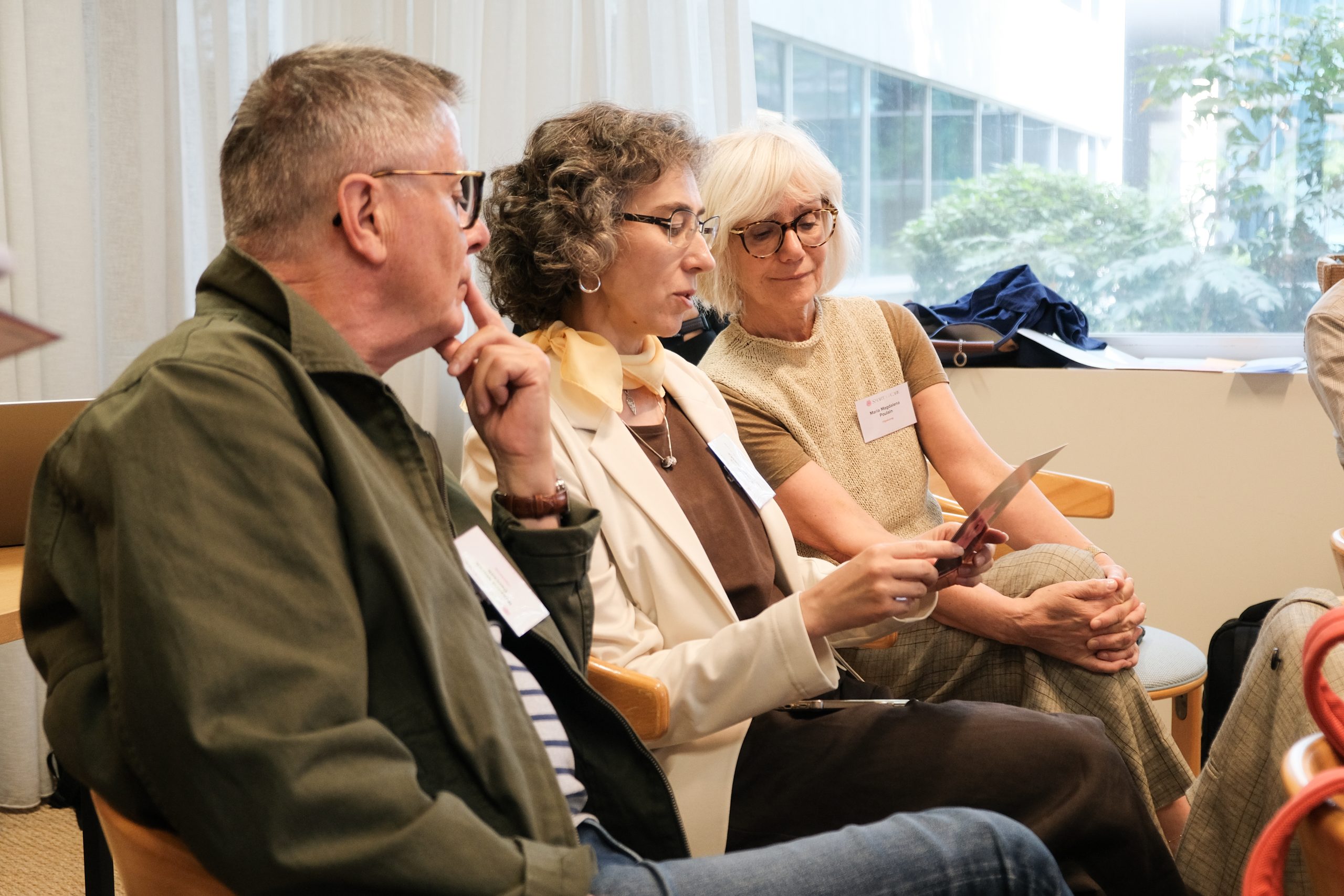
On Thursday 21 May in Brussels and online, experts, policymakers, practitioners, researchers, civil society organisations, and older adults came together for the final conference of the SmartAgeCare project, “Empowering Older Adults for the Digital Age”. The event marked the culmination of three years of collaboration among nine organisations from eight European countries working to promote a more inclusive, age friendly, and digitally empowered society.
The conference provided an opportunity to reflect on the project’s achievements, exchange experiences from across Europe, and discuss how digital innovation can contribute to healthier, more active, and independent ageing.
Why Smart Ageing Matters
Europe is facing a profound demographic transformation. As life expectancy continues to increase, ensuring that people can remain healthy, autonomous, and socially connected throughout later life has become a major policy and societal priority. While digital technologies offer significant opportunities to support wellbeing and independence, many older adults continue to face barriers related to digital access, skills, confidence, and inclusion.
Against this backdrop, the SmartAgeCare project was established to explore how digital tools, education, and community support can help create environments where older adults can actively participate in society and benefit from technological innovation.
Opening the event, participants reflected on the importance of moving beyond technology driven approaches and placing people, their needs, experiences, and aspirations at the centre of digital transformation efforts. https://digital-strategy.ec.europa.eu/en/policies/eip-aha
Exploring Challenges and Opportunities for Smart Ageing
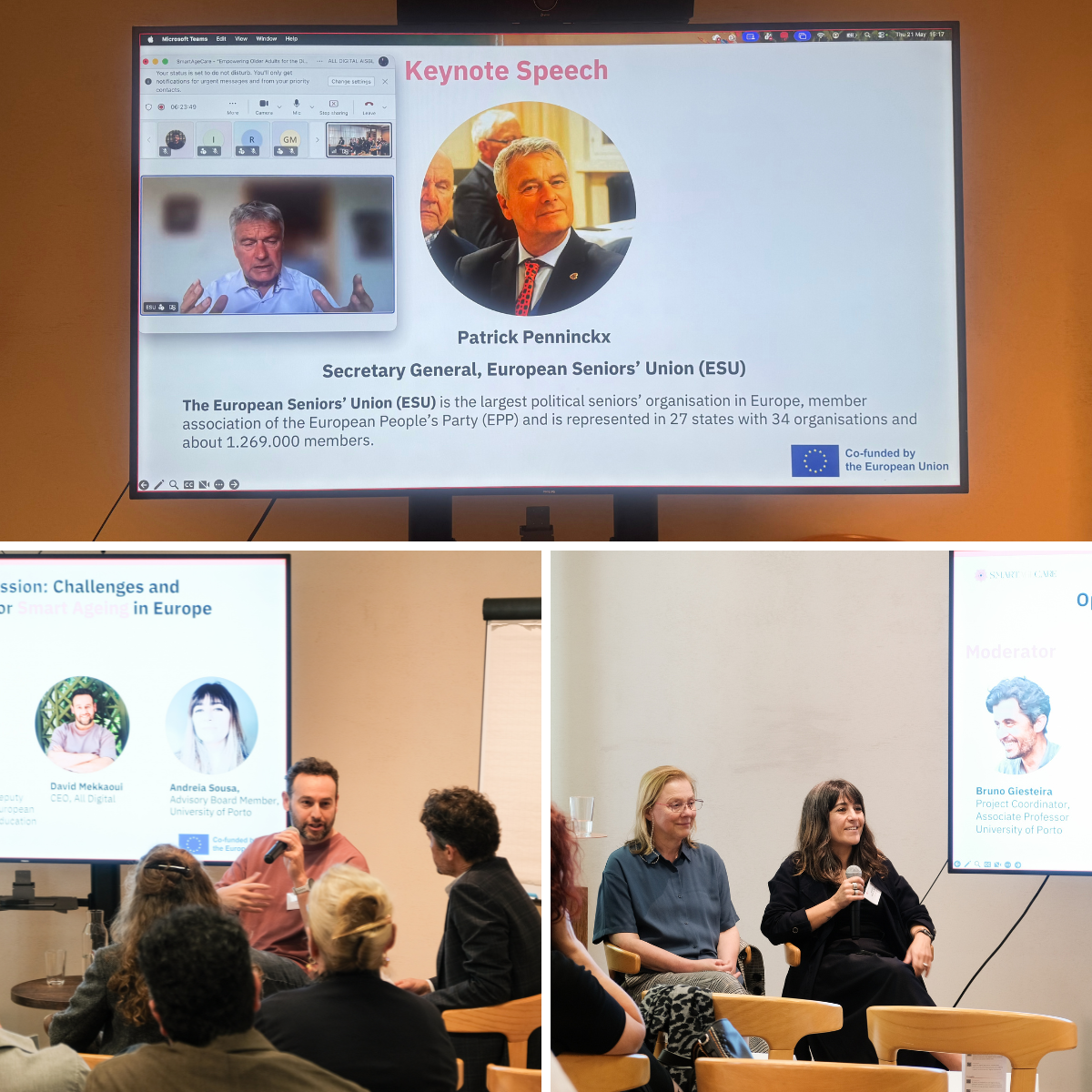
A highlight of the morning programme was the panel discussion “Challenges and Opportunities for Smart Ageing in Europe”, moderated by Bruno Giesteira from the University of Porto.
The discussion brought together distinguished speakers representing policy, education, civil society, and digital inclusion perspectives:
- Gina Ebner, European Association for the Education of Adults (EAEA), shared insights on the role of lifelong learning in supporting digital participation and active citizenship among older adults.
- David Mekkaoui, All Digital, discussed the importance of digital inclusion policies and community based approaches that help people develop confidence and digital competences throughout life.
- Andreia Pinto de Sousa, our Advisory board member from Portugal and expert in human-centered approach, contributed perspectives on how innovation can support quality of life while addressing the diverse realities experienced by older adults.
- During the second part of the event, a special keynote address was delivered by Patrick Penninckx from the European Seniors’ Union (the largest political seniors’ organisation in Europe, a member association of the European People’s Party (EPP), represented in 27 countries by 34 organisations with around 1,269,000 members), highlighting the importance of ensuring that digital transformation remains accessible and beneficial for all generations.
Presenting the SmartAgeCare Results
Afterwards, participants were introduced to the SmartAgeCare Ecosystem developed across all partner countries. Central to this ecosystem is the European Ambassadors Network, a group of older adults engaged in the project’s co-creation process. Their perspectives on the project’s three main pillars, citizenship, digital skills, and e health, were shared during the session. The ambassadors will continue promoting awareness, knowledge exchange, and good practices beyond the lifetime of the project.
The consortium also showcased the SmartAgeCare Toolkit, a collection of educational resources, guidance materials, and digital tools designed to support older adults, caregivers, educators, and organisations working in the field. Through an interactive demonstration session, participants had the opportunity to explore the toolkit’s resources and discuss practical applications in their own contexts.
In the afternoon, project partners presented findings from the project’s Delphi Studies, which gathered insights from experts across Europe regarding current challenges, future priorities, and emerging trends related to smart ageing. These findings informed the development of the project’s training programme and future policy recommendations.
The consortium also introduced the SmartAgeCare Training Programme, developed to strengthen the capacity of professionals and organisations supporting older adults. The programme combines practical knowledge, digital competences, and inclusive methodologies aimed at improving the adoption and effective use of digital technologies.
Looking Beyond the Project
Throughout the day, participants repeatedly stressed that the challenges associated with ageing populations cannot be addressed by a single sector or organisation alone. Building age friendly digital societies requires sustained cooperation across disciplines, sectors, and countries.
The SmartAgeCare project has contributed valuable evidence, practical tools, and a growing community of stakeholders committed to advancing this agenda. By combining research, capacity building, community engagement, and policy recommendations, the project has laid important foundations for future initiatives that support older adults in navigating an increasingly digital world.
As discussions concluded during the networking session, participants agreed that the conversation on smart ageing is only beginning. The knowledge generated through SmartAgeCare, together with its resources and stakeholder network, will continue supporting efforts to ensure that digital transformation enhances wellbeing, autonomy, participation, and quality of life for older adults across Europe.
Missed the event? The recording will be made available on our YouTube channel.
All related resources are accessible on the project website.


