

31 Jul Digital wellbeing has no common definition in European schools, PERMA-Digital finds
31 Jul, 2026
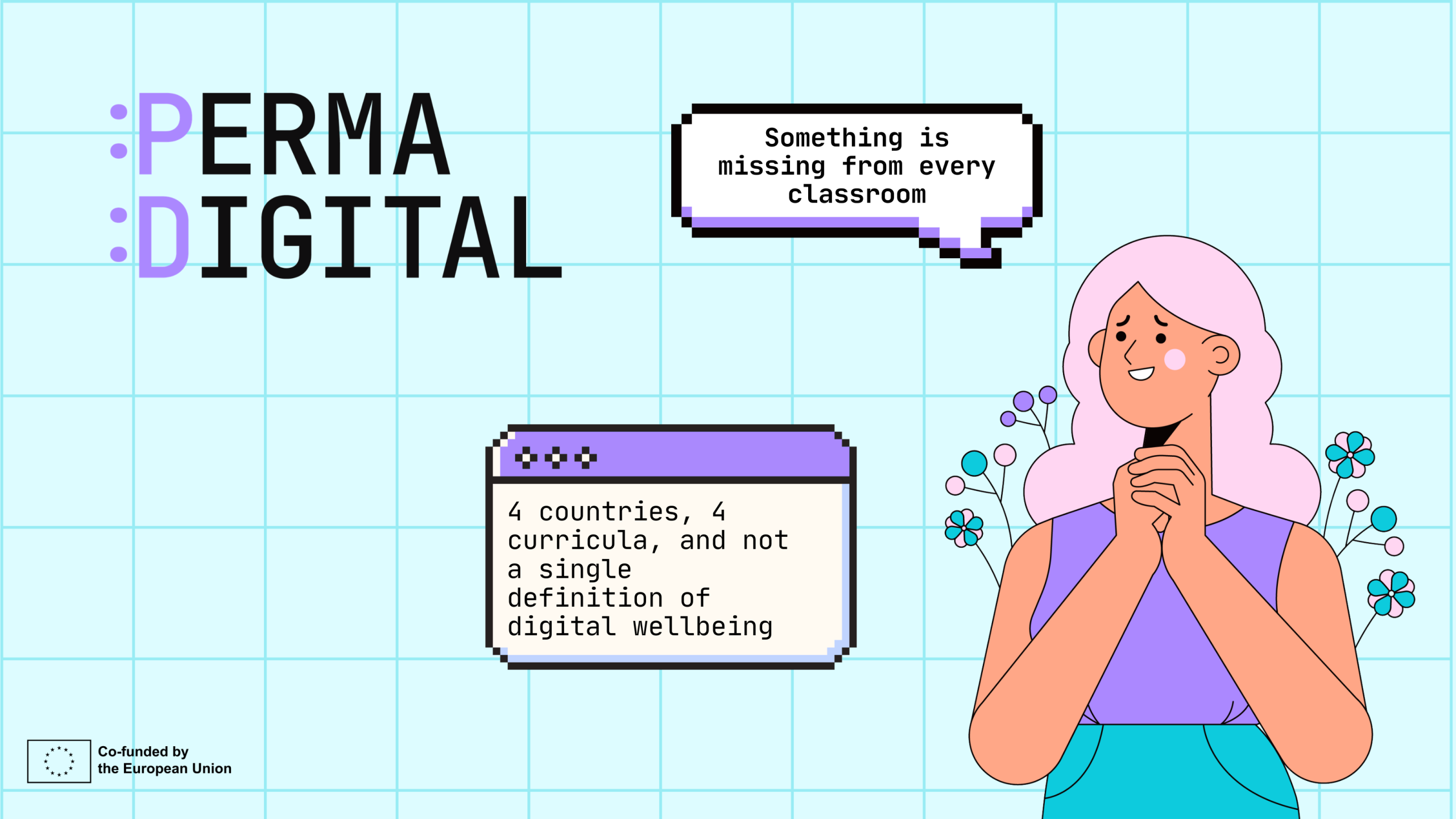
 A research report from PERMA-Digital mapped how digital wellbeing is taught across Cyprus, Finland, Greece and Ireland, and found the same gap in every country. The term is either missing from national curricula altogether or defined so loosely that it means something different in every classroom.
What schools do teach instead is online safety: cyberbullying lessons, screen time rules, basic internet guidance. Useful, but not enough for a generation spending more of their lives online than off it. Children are not just at risk online. They are building friendships, finding meaning, and figuring out who they are, and a growing part of that now happens through a screen. Whether schools are supporting that is a question most curricula are not yet asking.
This is where PERMA-Digital steps in.
The project has built a framework that brings together three things that already existed separately: DigComp, the EU’s blueprint for digital skills, LifeComp, its companion framework for personal and social skills, and PERMA, the wellbeing model built around Positive Emotion, Engagement, Relationships, Meaning and Accomplishment. Mapping the first two onto the five PERMA domains gives teachers and families a practical way to talk about digital habits that goes beyond simple screen time limits.
A few clear patterns have emerged from teachers involved in the project:
- Students are often confident, frequent users of technology, but that doesn’t mean they understand how it shapes their emotions, relationships or sense of purpose.
- Unsupervised use at home is a real concern for teachers, and parents want to help but often don’t know where to start.
- Two areas are consistently underrepresented in school life: Positive Emotion and Meaning. Schools rarely ask whether a digital experience feels good or connects to something a student cares about.
- Simple device bans are not the answer. Teachers and technology providers agreed that building capacity, not restricting access, is what helps.
To put the framework into practice, PERMA-Digital has developed free resources for both families and teachers, including short classroom routines and home activities built around each part of the PERMA model, from a two-minute emotional check-in to a weekly family screen time challenge.
PERMA-Digital is funded under Erasmus+, coordinated by CARDET, with partners from five countries including ALL DIGITAL AISBL.
Read the full research report and explore the free family and teacher resources on the PERMA-Digital website.


