14 Jul Inside the International Eco-Digithon: what does the future of sustainability look like when students design it?
14 Jul, 2026
Across two Zoom sessions in June, eight international teams of students aged 15 to 19 pitched something they’d spent months building: real solutions to real environmental problems in their own communities. Water, energy, biodiversity, the circular economy: the topics were big, but the approach was hands-on, local, and entirely theirs.
This was the International Eco-Digithon, the flagship activity of ENNEPlus, an EU-funded project that brings EGInA’s Social Hackademy Methodology into Vocational Education and Training (VET) centres. VET students aren’t always the first group people picture when they think of youth-led innovation, and this event was built specifically to change that.
Two sessions, eight projects
The first pitch session took place on 1 June and covered projects 6 to 9. EGInA General Manager Altheo Valentini opened with a talk on the ENNEPlus vision and its European ambition, followed by All Digital walking through the methodology and evaluation criteria, and a short presentation from the jury.
Then the pitches started: Flysch Guardians, on technology for geological heritage conservation; Algeciras from the Sky; ROV Okamurae; and Monitoring of Coastal Infrastructure, an open-source engineering project for coastal resilience and tsunami warning. Each team got a pre-recorded pitch followed by a live Q&A with the jury, with the audience reacting live through emojis after every presentation.
A second session followed on 5 June, with the same format but a different lineup: projects 1 to 4. SENTINEL-GREEN, an AI-powered smart lighting system for sustainable cities, opened the round, followed by SMARTBLUE, an early warning and monitoring system for marine mucilage on the Marmara Sea; Under the Asphalt, on thermodynamic energy from urban surfaces; and a smart water safety monitoring system to close it out.
In both sessions, once all four teams had presented, the audience voted for their favourite via a Mentimeter poll while the jury moved into a breakout room to score the projects. And in both, while the jury deliberated, a past winner from a national Eco-Digithon joined the main room to talk about their own experience: what was hard, what clicked, what it felt like to see an idea become real. On 1 June, that spotlight went to BiteBack-Box, a zero-waste initiative from Austria that connects bakeries and supermarkets with local farmers, turning leftover bread into animal feed and cutting food waste and CO₂ along the way.
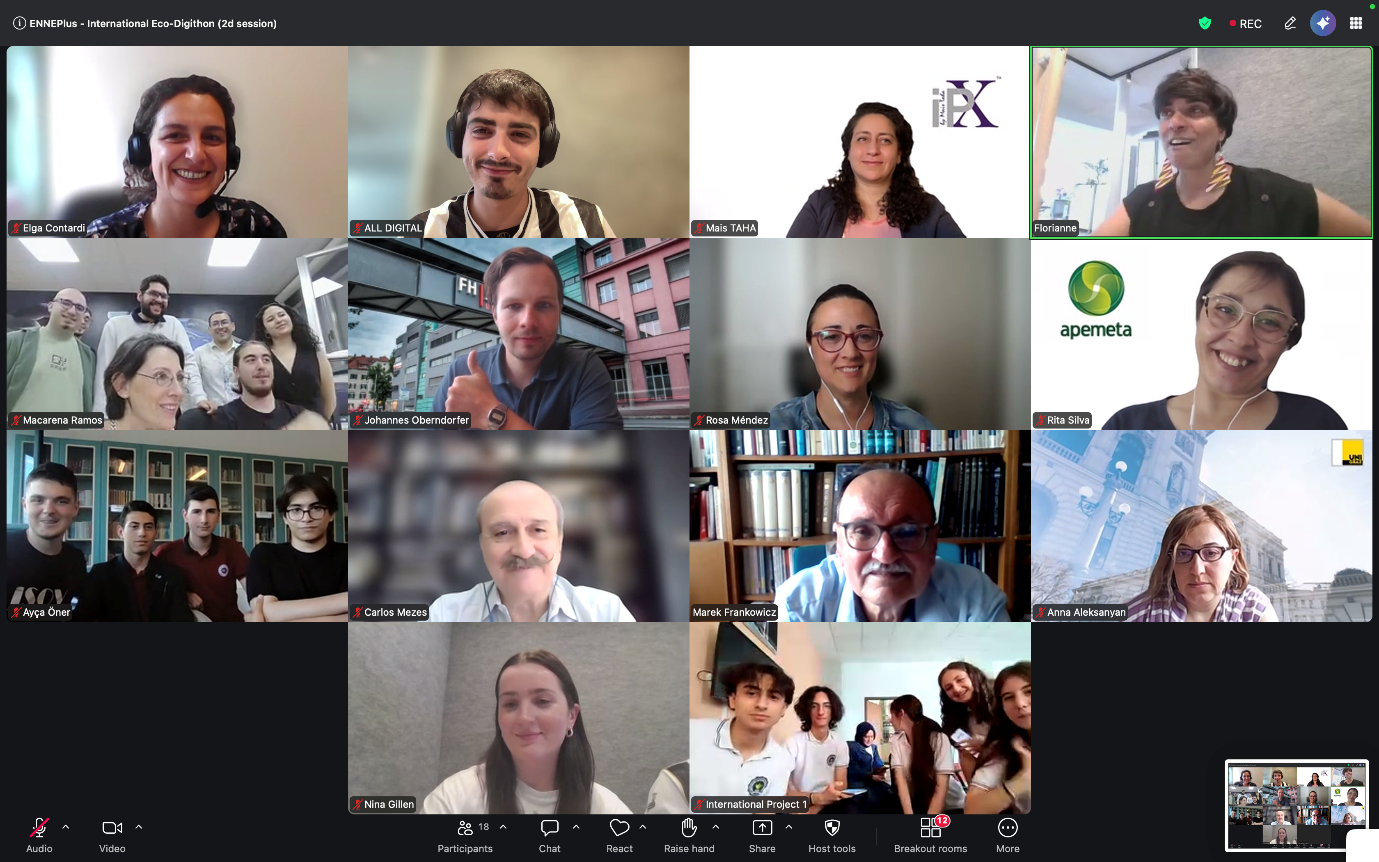
Both sessions closed with the jury president highlighting what stood out across the pitches and a virtual group photo. The 5 June session had one extra item on the agenda: a first look at the prize categories, and a save-the-date for the ceremony still to come. Another initiative highlighted the circular economy through the work of IES Francisco de Quevedo, a Spanish VET centre from Madrid. Its idea, PlastiScore Verified – Intelligent Plastic Packaging Counting Index, focuses on the development of a scanning application capable of identifying and counting plastic packaging through an intelligent tracking index. The proposal aims to make this type of waste easier to monitor and measure, providing a useful tool to improve plastic-waste management and move towards more sustainable and responsible models of plastic use.
A teacher’s perspective
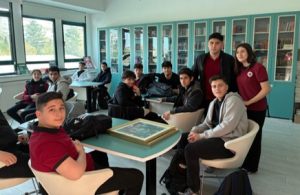
Hatice Kırmacı, who coordinated the Turkish teams on behalf of All Digital, saw a version of that same transformation up close, from a shaky start with students who had little experience in project-based work to what she describes as “an incredible transformation” after the final presentations. Read her full story in our dedicated feature.
The results are in
Out of eight projects, three made it through: ROV Okamurae, SENTINEL-GREEN, and AquaSentinel (the smart water safety monitoring system). All three will present again on 29 June, this time as part of the EU Green Week 2026 prize award ceremony, an official Partner Event of EU Green Week and a much bigger stage than the pitch sessions that got them there.
The ceremony itself runs on Zoom. All Digital’s deputy head of projects, Florianne Heine, opens with a short introduction connecting the Eco-Digithon to EU Green Week, before the jury president share the results of the competition and feedback on the final evaluation. Then it’s the winning teams’ turn: eight minutes each to present their solution to a global audience, followed by closing remarks and next steps toward Social Hackathon Umbria (SHU), before the closing group photo.
First place wins a fully-covered trip to SHU Umbria 2026 in Cascia, Italy this July, where they’ll present their winning solution in person and go head-to-head with the winners of other national Eco-Digithons. Second place gets an hour of personal coaching with All Digital’s CEO. Third place gets a tailored recommendation letter written by All Digital. All three podium teams get a spot at EU Green Week, and every team that took part across both pitch sessions walks away with an official participation certificate.
These students put months into this, working across time zones, languages, and school schedules. Now it’s their moment to be seen, and for three of them, the story is only just getting started.


